


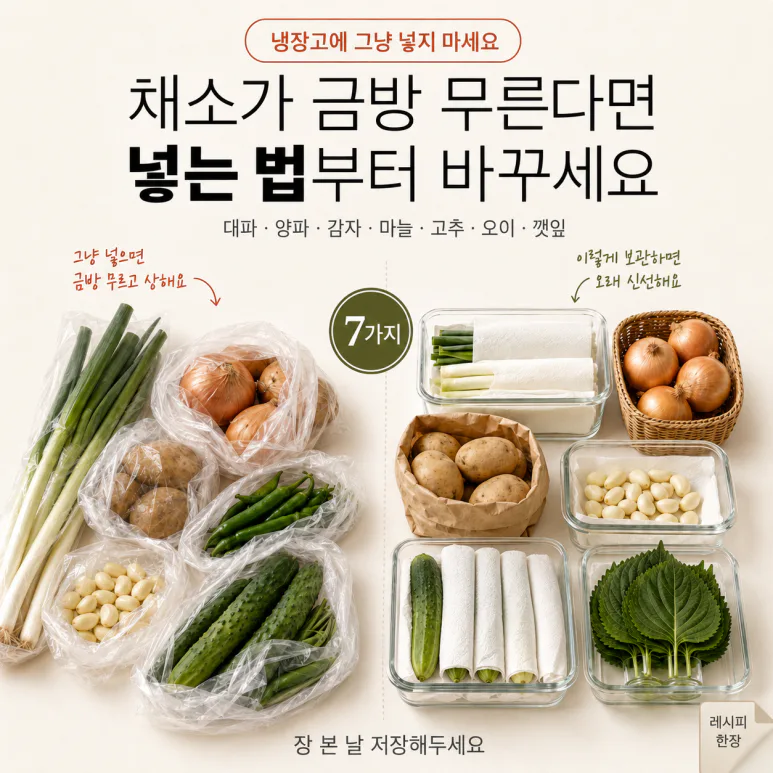
If the vegetables wilt quickly - 7 ways to store vegetables that need to be changed before putting them in the refrigerator
Why do those crisp vegetables that were so fresh in the grocery store quickly wilt when they only come out of the refrigerator? The scallions turn yellow at the ends, the cucumbers become mushy, and the perilla leaves turn dark from the edges. I used to think, “Since it’s a vegetable, put it in the fridge first.” But I found out that each vegetable has its own preferred temperature, and some need to be dried before putting in, while others need to retain moisture. Especially if you leave them in the plastic bag as is, moisture builds up inside, causing them to...
The vegetables that were so fresh at the supermarket
When you only go into the refrigerator and come out
Why does it retreat so quickly?
The green onions end up turning yellow.
The cucumber gets squishy
The sesame leaves get dark from the edges.
I used to be like that too
"Since it's vegetables, first put it in the refrigerator."
I thought like this.
Turns out, it depends on the vegetable
The favorite temperature is different,
Vegetables that need to be dried and put in
The vegetables that need to maintain moisture were different too.
Especially if you keep it in the plastic bag as it is
As the humidity builds up inside
In fact, the condition can get worse quickly.
Today, I often buy it when I go shopping.
Scallions, onions, potatoes, garlic, chili pepper,
Cucumber, perilla leaves
7 ways to store vegetables
I will organize it all at once.
7 vegetable storage methods to see at a glance
Green onions - If washed, remove the moisture and refrigerate.
Onions — a cool, ventilated place
Potatoes — hiding from the light and getting dark
Fresh garlic — refrigerated without moisture
Pepper — sealed after moisture management
Cucumber — avoid cold places
Katsae — Provides moisture to the stem more than the leaves
Even the same vegetable
Depending on the condition at the time of purchase, the temperature inside the house, and the temperature of the refrigerator
There are differences during the period of maintenance.
So today
More than "for a few days"
How to put it so it doesn't get wasted less
I focused on it.
1. dilapidation
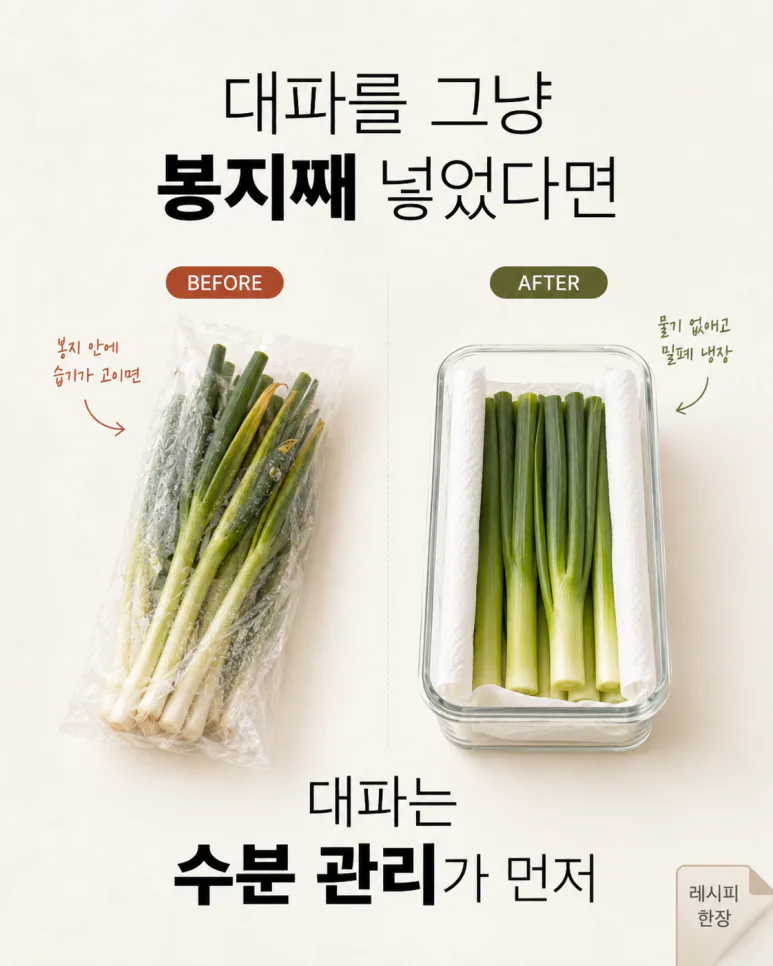
If you've washed it, remove all the moisture first.
If you buy one bunch of scallions
The first thing you do is to clean it.
The problem is the washed scallions
It is when you put it in an airtight container immediately after leaving moisture.
In agriculture, when storing scallions for a short period of time
Wrap it in a plastic bag or newspaper and refrigerate,
If it's washed green onions, remove the moisture after washing.
Please put it in an airtight container and refrigerate it.
In the research of the Agricultural and Forestry Research Agency, there is also storage capacity of scallions
Moisture loss and packaging were confirmed to be important factors.
This is the easiest way for me to organize it.
If it's unwashed scallions
Just organize the upper leaves on the outside
Wrap it in newspaper or plastic and put it in the refrigerator.
If you have already washed
Dry the moisture between the kitchen towels
After dividing it according to the height of the refrigerator
Please put it in a sealed container.
If you lay a dry kitchen towel on the bottom of the container
It's also convenient to check the moisture that may appear later.
If the kitchen towel is wet
Please change it to a new one.
If you bought a lot, shred it.
After removing the moisture thoroughly and freezing it,
In soup or stew, stir-fried rice
It's good to take it out and use it right away.
The key is not whether you put it up or not.
Not keeping it wet for a long time.
2. an onion
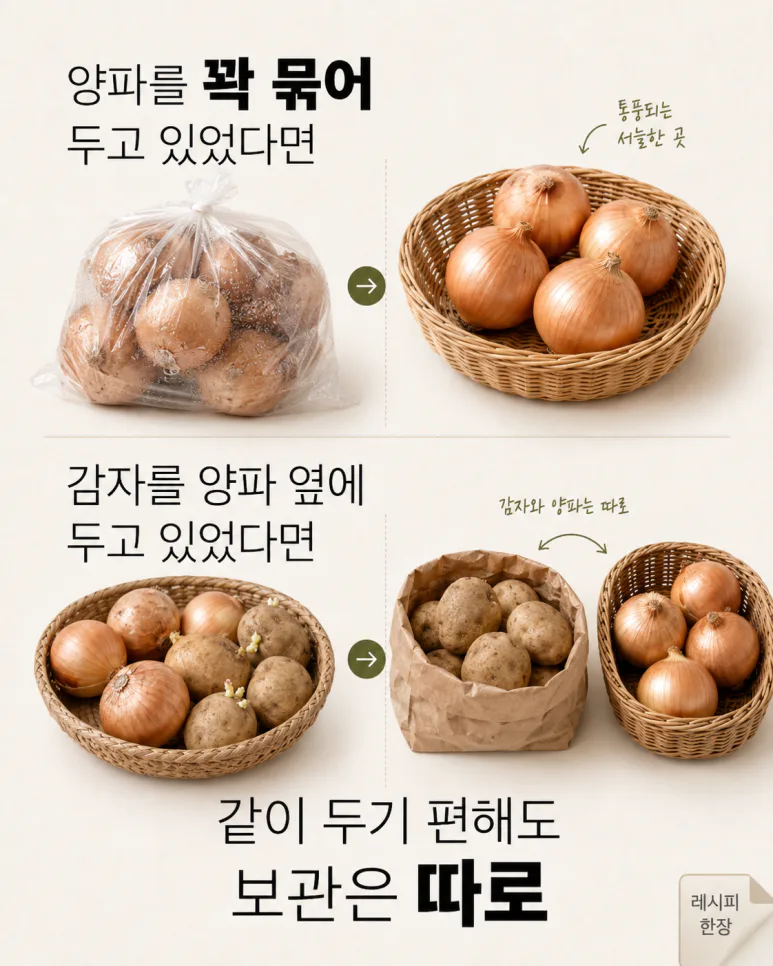
Ventilation comes first before tightly tied plastic.
Onions are more than in the refrigerator.
You have seen a lot of people putting it in the basket.
There is a reason.
The Rural Development Agency grows root vegetables such as onions.
Put in a cool place where the wind can flow well
I recommend the method, and
Even in the university agriculture Extension materials
Dry onions are in cool and dry conditions
Classify it as a vegetable to be stored.
So the onions I bought
Put it in a plastic bag
Rather than tying it tightly up until the entrance
Like a basket or a sack
It's better to have a place where the air can flow.
A window that gets a lot of light
Please avoid places that are hotter than next to the gas stove.
However,
Onions peeled or cut are
It will be changed to be stored in the refrigerator by sealing it.
Whole onions and chopped onions
The storage method is different.
3. a potato
What you should see before the refrigerator is 'light'.
I bought a bag of potatoes and forgot it
When you open it one day
There are times when it grows up.
Potatoes are above all
You should avoid the light.
The Rural Development Agency says when storing potatoes at home
In a cool place where there is no sunlight
Paper boxes that do not let light through, etc.
Guide you to use it.
If you receive light for a long time, potatoes turn green.
Because the glycosalcaloid component can increase
You should be careful of the parts that have turned green and the sprouts.
So potatoes are
Paper bags or paper boxes are better than transparent plastic bags,
or can block the light
A ventilated basket is comfortable.
And potatoes and onions are
Instead of mixing it in one basket
It is better to keep it separately.
Both of them like cold and dark places, but
Because of each other's moisture and storage environment when kept together
There are also storage instructions that may cause quality degradation to occur faster.
Potatoes and onions,
It's a favorite when cooking, but it's separate when storing.
4. Crispy garlic
Check from the water droplets inside the bag
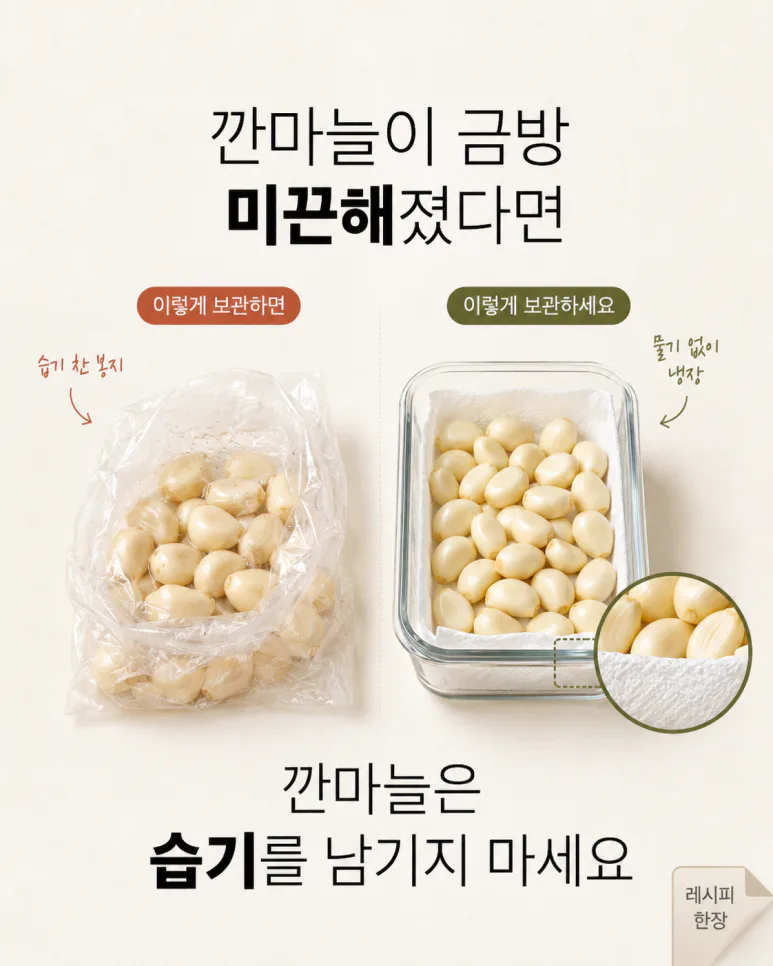
If you buy a bag of garlic cloves
A few days later inside the envelope
There are times when water droplets form.
If you keep it in this state for long
The garlic surface is easy to get slippery.
Whole garlic is basically
It is a vegetable that should be stored in a dry and ventilated place.
On the other hand, garlic peeled or cut is
It is appropriate to refrigerate.
If fresh produce is washed before storage, it should be thoroughly dried,
It must be refrigerated after peeling or cutting the skin.
There are also food safety guidelines.
Raw garlic is
If you have washed it, wipe off the moisture thoroughly.
Please put it in a dry airtight container.
If you lay a kitchen towel on the bottom of the container
It is easy to check if water is produced.
If the towel gets wet in the middle
Please replace it.
Here is one thing to remember.
Fresh garlic is not 'so moist'
It is the side that does not leave unnecessary moisture.
5. a red pepper
If you have washed it, please dry it completely before adding it.
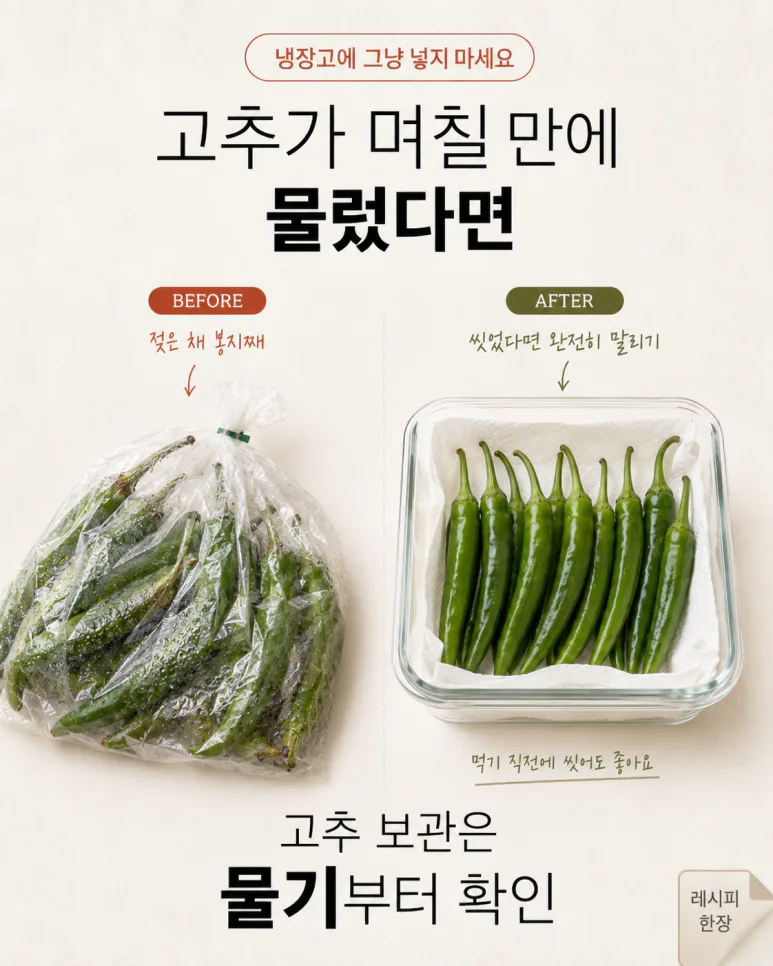
Like chili peppers and scallions
Water management is important.
In agriculture, it is the green chili pepper.
If you washed it with running water
Dry off the moisture well
Please instruct to seal it in a plastic bag and refrigerate it.
Green chilies are sensitive even at low temperatures.
At excessively low temperatures, there is discoloration of the seeds or
Surface damage may occur.
So if it's not the amount you can eat at once
Stored in an unwashed state
It's also convenient to wash when eating.
If you had washed in advance
Spread it on the kitchen towel
After removing the moisture from the surface enough
Please put it in a bag or container.
Like 'You have to remove the tip to it will last forever'
You don't have to see only one way as the answer.
Instead, what should we see first is
Whether the chili pepper is not wet,
I wonder if it's not freezing too cold in the refrigerator.
6. a cucumber
It shouldn't be too cold even in the refrigerator.
Surprisingly, cucumber
It is a vegetable that is sensitive to low temperatures.
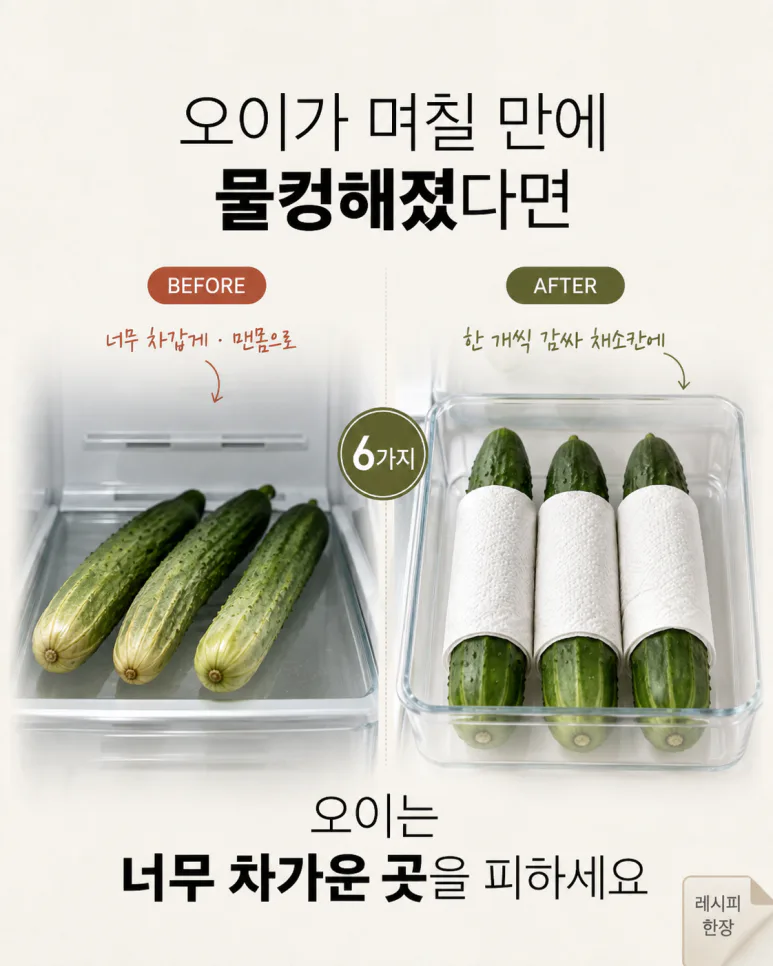
The Rural Development Agency determines the appropriate storage temperature for cucumbers.
It is about 10~12℃.
Even in UC Davis's post-harvest storage materials
The appropriate storage temperature of cucumbers is about 10~12.5℃, and
If exposed to a lower temperature for a long time
The surface dips or slides
It explains that hypothermia can occur.
But not cucumbers in summer
It doesn't mean to keep it in the warm kitchen.
At home, like the inside wall of the refrigerator
Especially avoid low temperature locations
In a relatively warm place like a vegetable can
It is realistic to leave it and use it quickly.
If there is moisture on the surface, wipe it off.
To reduce the loss of moisture
Wrap each one lightly with a piece of paper or kitchen towel.
It is convenient to manage by putting it in the vegetable container.
And one more.
Because cucumbers are sensitive to ethylene
Unlike fruits that release a lot of ethylene like apples
It's better to drop it and store it.
Cucumber is not necessarily colder, but
The point is 'not too cold'.
7. a sesame leaf
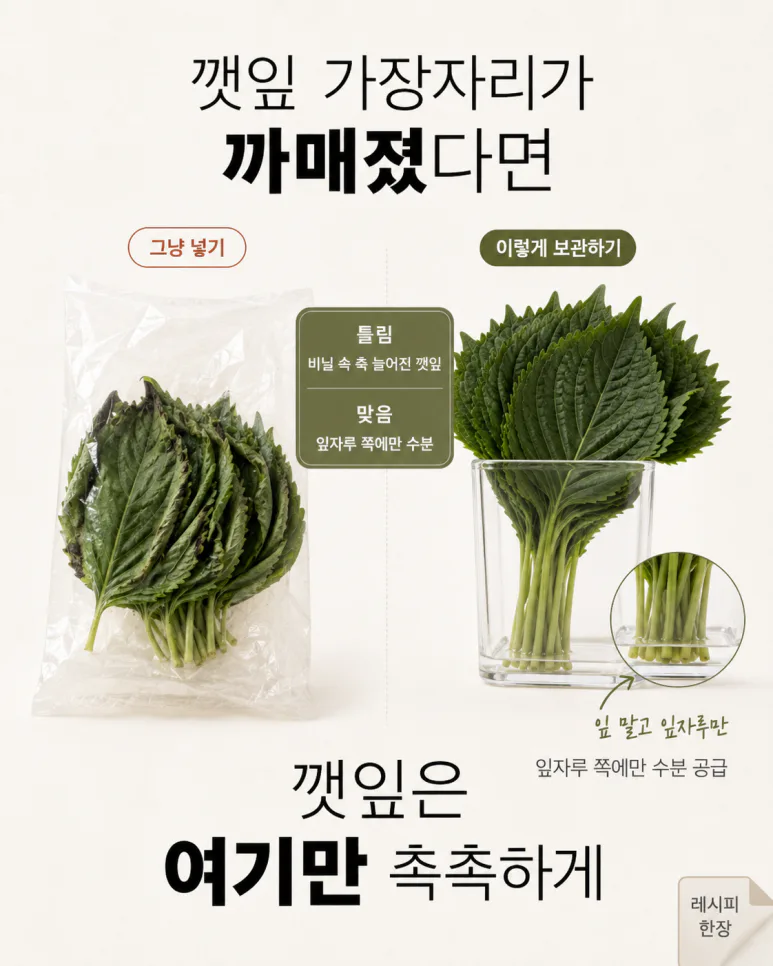
Please give water to the base of the leaf, not the entire leaf.
Among these 7
The most memorable thing is the green cabbage leaf.
If you put the perilla leaves in the refrigerator in their packaging,
From the edge after a few days
There are many cases where black spots appear.
The Rural Development Agency actually
Only let the leaf stem of the bay leaves touch the water.
I tested the storage method that provides moisture.
Put 40~45mL of water into the special packaging bag and
Soak the leaves in water and seal it.
It is maintained around 5~6℃
When stored on the side of the refrigerator door
In experimental conditions, up to 3 weeks
The result was that the freshness was maintained.
What's important here is
It's not about soaking the entire leaf in water.
Leaf stalk, that is
It ensures that only the tip receives moisture.
At home, use small slim containers or cups.
After letting only the tip of the stem touch with a very small amount of water
Please do not let water accumulate on the leaves.
If you wash and store the perilla leaves
It is best to first clear the remaining moisture on the leaf surface.
You can't just dry the sesame leaves,
You cannot make the entire leaf wet.
Give moisture to the leaf stalk
The leaves should not be wet.
Just remember this difference.
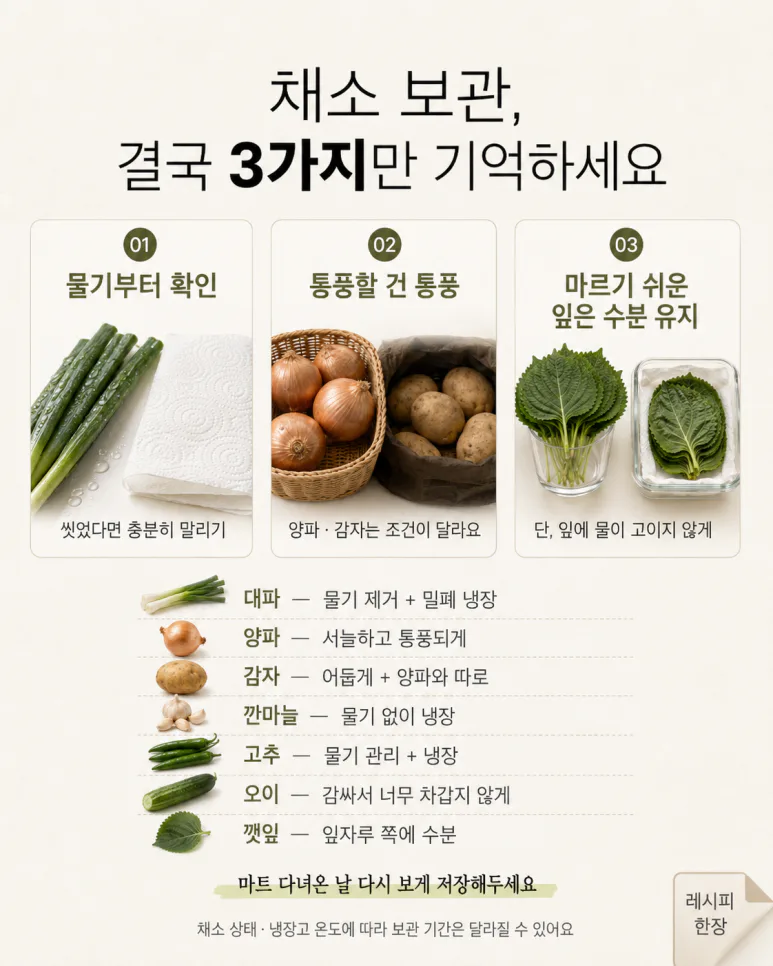
Remember only three things when storing vegetables:
When you come back after shopping
It is easy to put all the vegetables in the refrigerator in the same way.
But looking at the 7 things today
The standards change a little bit.
First, vegetables that should not have any moisture left are
Clean thoroughly before putting in.
Green onions, garlic cloves, and chili are closest to here.
Second, vegetables that require good ventilation and sunlight are
Don't even look for the refrigerator.
Onions and potatoes
First, find a cool and ventilated place.
Third, easy-to-digest vegetables are
Not to be completely free of moisture.
Especially the perilla leaves
Providing moisture to the leaf stalk helps.
And the cucumber
From the thought that "it's a vegetable, so it's the coldest place"
I would like to change it once.
The day I came back after shopping at the supermarket
Please take this article out once.
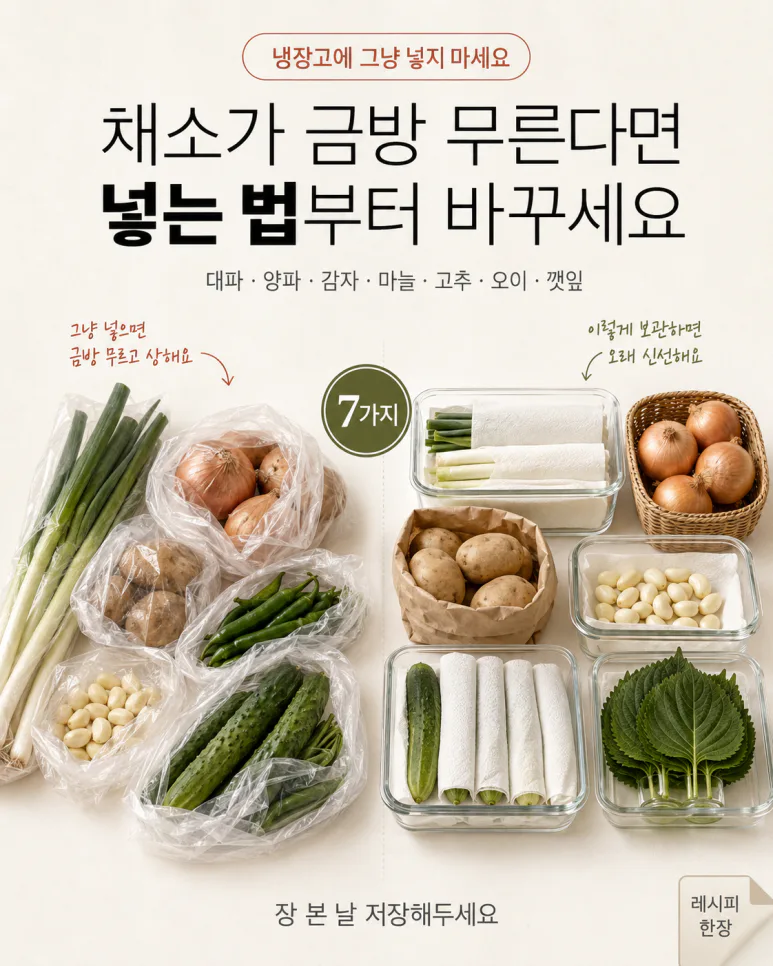
Before putting the plastic bag in the refrigerator
If you just tidy it up for only 5 minutes
A vegetable that wil wilt a few days later
It helps to reduce.
You are in the refrigerator
What vegetable tends to wilt the most?
Save it and check it one by one on the day you bought it.
#VegetableStorageMethod #VegetableStorageMethod #RefrigeratorCleaning #RefrigeratorVegetableStorage #IngredientStorageMethod #GreenOnionStorageMethod #OnionStorageMethod #PotatoStorageMethod #GarlicStorageMethod #RawGarlicStorageMethod #PepperStorageMethod #CucumberStorageMethod #SesameLeafStorageMethod #How to Store Vegetables Long-Term #IngredientManagement #LifeTips #KitchenTips #ShoppingTips #RefrigeratorStorageMethod #One-Meal Workshop