


Lee Yeon-bok's Spicy Stir-fried Vegetables Recipe: Juiciness Explodes with the Secret Meat Seasoning Method!
Went to a Chinese restaurant and chili peppers...

Even if you order just one dish like spicy stir-fried noodles at a Chinese restaurant, it's over 30,000 won, right?
But if it was 10,000 won at home, we would have solved it much more generously and deliciously 😊
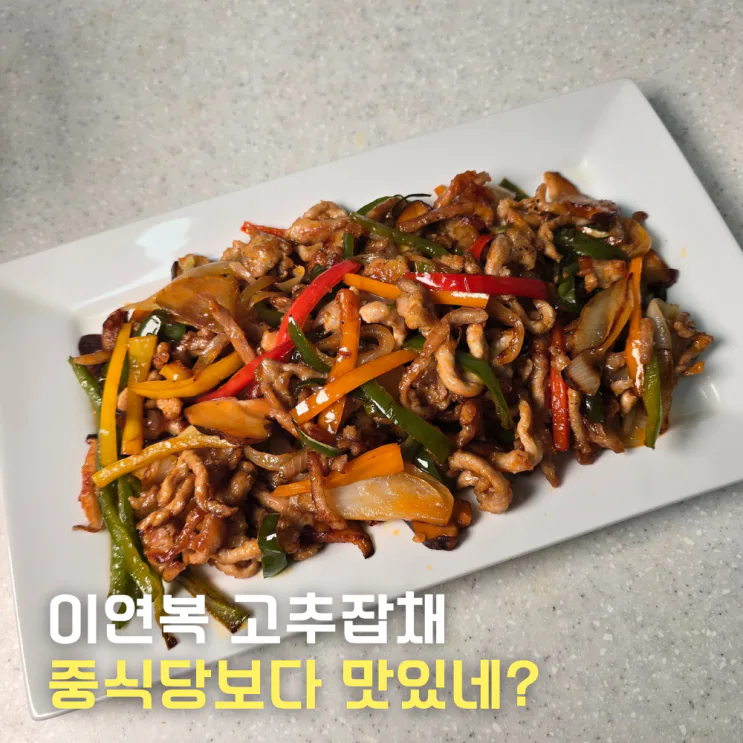
Honestly, I used to just stir-fry meat and vegetables randomly and it completely ruined it.
But when I added just one of Lee Yeonbok chef's secret recipe, 'egg wash coating', it became as soft as real beef!
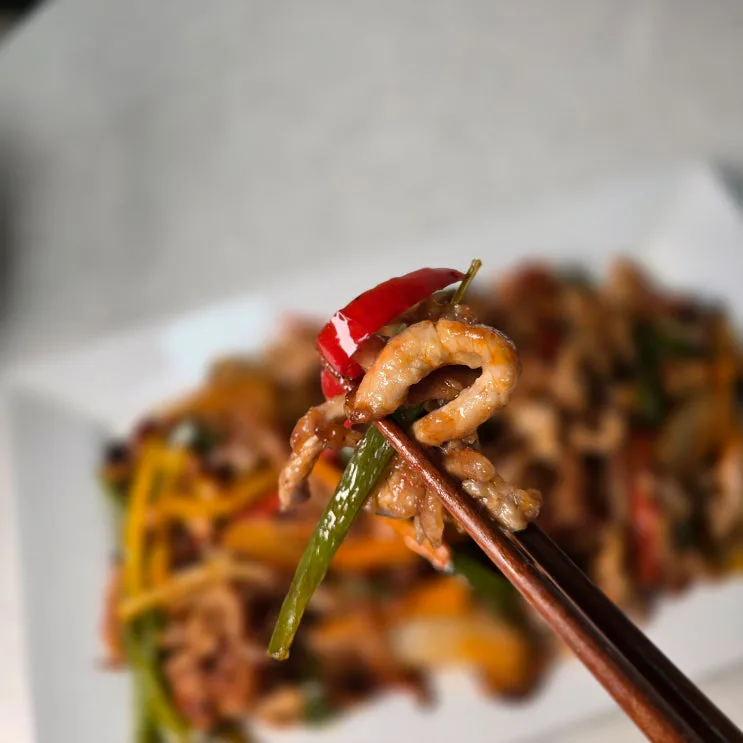
Don't lie too much, the meat melts in your mouth 🤤
"Is this pork?" I was ready to say that.
Moreover, it takes just 10 minutes!
Today I will tell you the secret to successfully making Lee Yeonbok's spicy jajchae recipe without any failures 💕
🥘 Preparation of ingredients
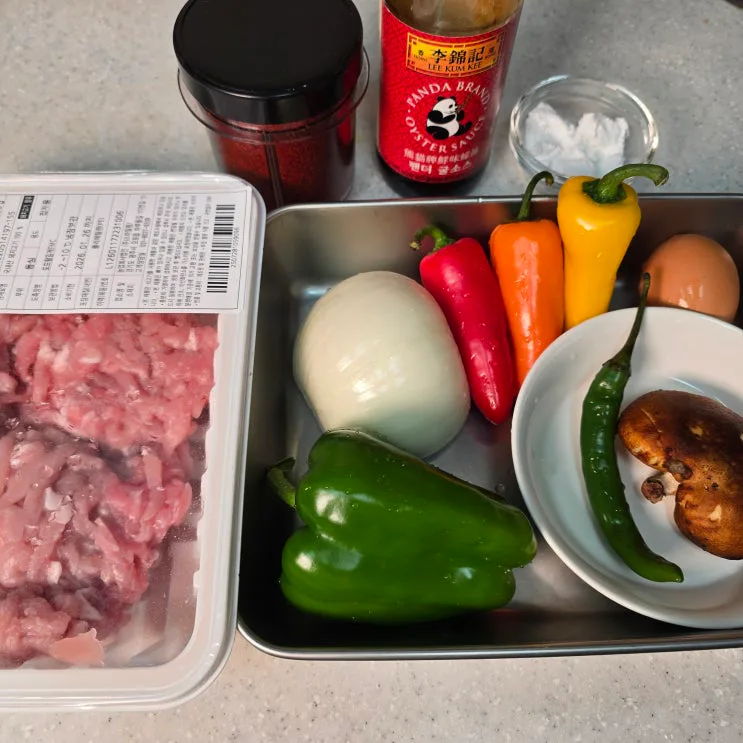
Main ingredient
- Pork tenderloin (or 300g pork loin (for stir-fry))
– 2 peppers
- 1/2 red pepper
– 1/2 onion
- 1 shiitake mushroom
- 1 green chili pepper (optional)
Meat underbelly
- 1.5 tablespoons potato starch
- 2~3 tablespoons of egg water
– A pinch of salt and pepper
spice
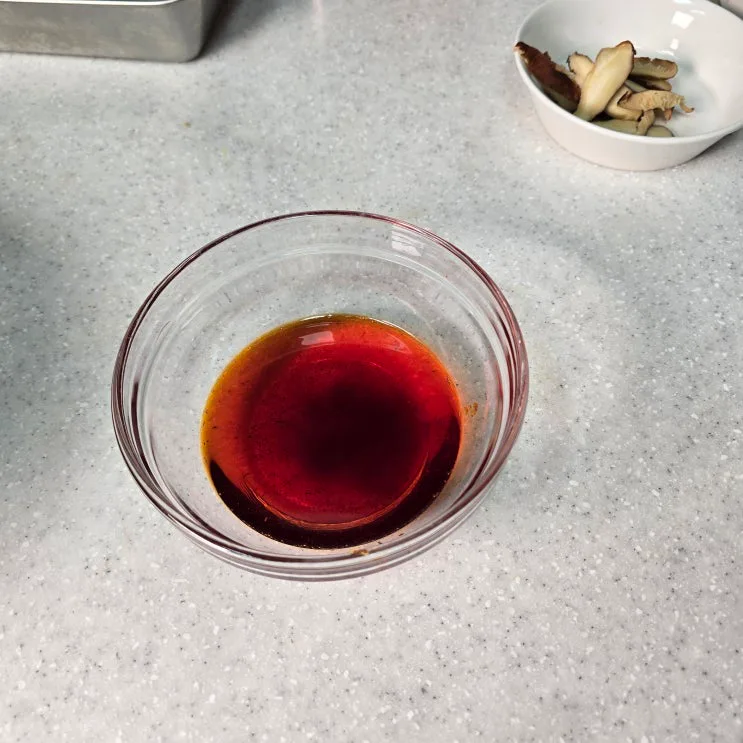
- 3 tablespoons of chili oil
- 2 tablespoons of oyster sauce
– dark soy sauce 1 tablespoon
👩🍳 How to make spicy rice noodle salad by Lee Yeonbok
Step 1: Seasoning the meat (Key tip!)
Add 1.5 tablespoons of potato starch to the pork loin and mix well, then add 2~3 tablespoons of egg wash and stir gently.
This is Lee Yeonbok chef's secret recipe!
The meat's outer surface is coated to retain the juices.
I was also hesitant at first, but after stir-frying it, the texture was completely different 🔥
Tip: Egg wash is just enough by mixing 1 egg and adding only 2~3 tablespoons.
Step 2: Cook the meat briefly and leave it out
Heat some cooking oil in the pan and cook the base meat first.
Once the meat is cooked golden brown, immediately remove it separately onto a plate.
Attention: If you stir-fry vegetables with meat because it's inconvenient, the meat gets tough and the vegetables wilt. The key is to leave them out for a while!
Step 3: Prepare the vegetables
Please slice all the peppers, paprika, onions, and shiitake mushrooms thinly.
Chopped green chili peppers and green onions are also prepared!
The point is to cut the vegetables thinly.
The marinade is well absorbed, so it's much tastier 😊
Step 4: Stir-fry vegetables in chili oil
Add all the onions, bell peppers, paprika, shiitake mushrooms, and green chilies to the pan where you were sautéing the meat (with leftover oil), and turn on high heat! Heat 3 tablespoons of chili oil in the pan and sauté until cooked through.
Step 5: Season and combine
When the vegetables are about to run out of breath, please add the meat you previously drained and stir quickly!
Add 2 tablespoons of oyster sauce and 1 tablespoon of soy sauce and stir quickly on high heat until the ingredients are well mixed.
Pepper is also popping
As if you finish it in just 1 minute! If you cook it for too long, water will form.
at last Completed making chili jajchae!
I grabbed a big fork with a spoon and put it in my mouth...
Wow...It was so soft that I thought it was pork loin!
Thanks to the egg wash coating, the meat juice is bursting with flavor 🤤
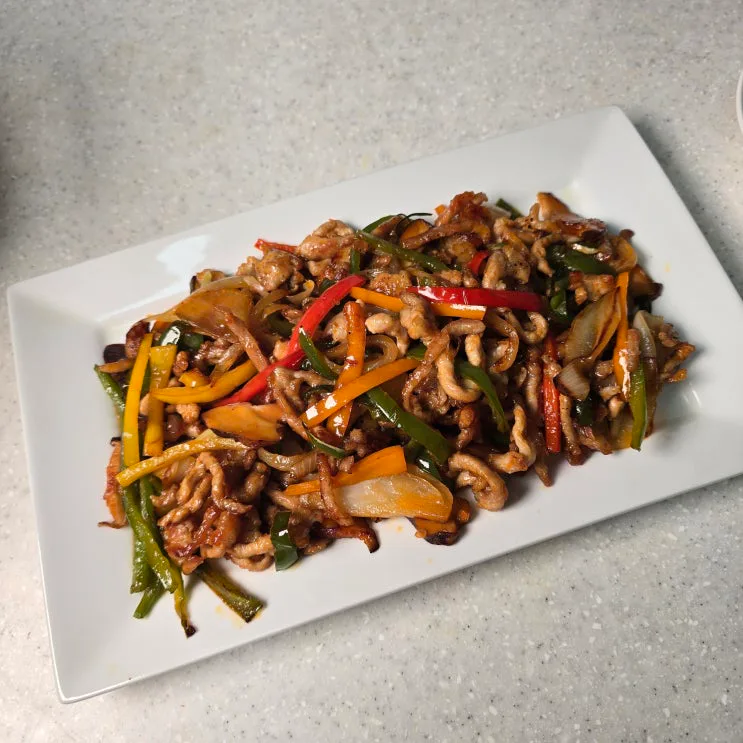
I didn't have time to prepare the flower bread, so I just put it generously on top of freshly cooked white rice and ate it as a rice bowl.
The spicy and savory seasoning soaked into the rice grains, so I ate two bowls of rice 😊
It's amazing even as a drink garnish!
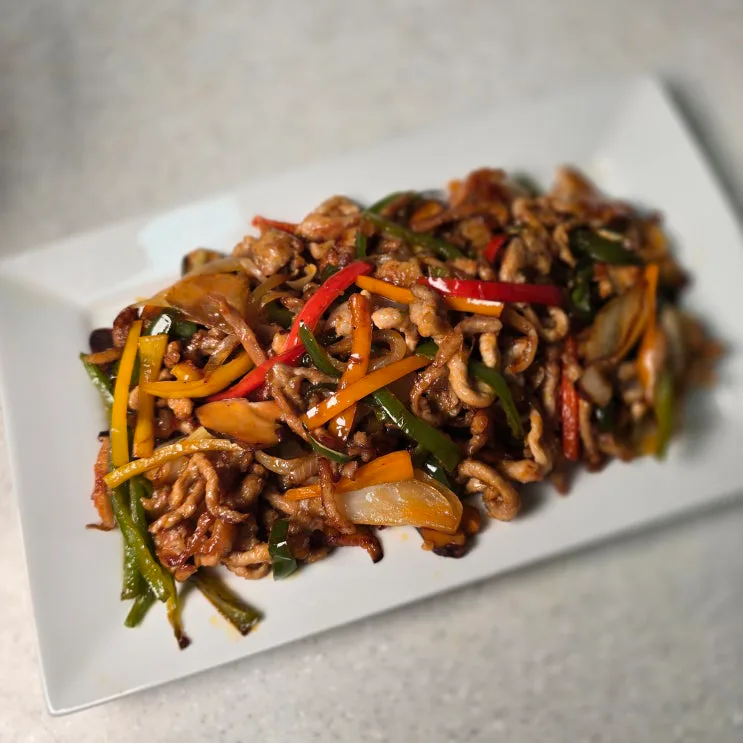
If you follow the recipe I gave you today in the order provided, 99% successBut. If 'Huh? It's 2% short?' If you want, the culprit is probably oyster sauce.
The salinity and umami concentration of oyster sauce vary completely depending on the brand. I've used it for a long time too, but for Chinese cuisine, the answer is always to use the one with a 'panda (Lee Geum-ki)' drawing. haha
Even if you don't know anything else, please make sure to get this. The flavor is different.
🔥 Making chili oil (Baek Jongwon recipe)
Chinese cuisine is all about chili oil!
You can buy the commercial products, but if you make it yourself, it's much cheaper and tastes good 😊
How to make it:
Step 1: Pour 1 cup of cooking oil into a pot and heat it on medium heat.
💡 Caution: If it's too hot, gochugaru (Korean red pepper flakes) will burn! It's just right if you see small bubbles bubbling when you put a fork in it.
Step 2: Turn off the heat and add 1/2 cup of gochugaru (Korean red pepper flakes).
[HANKKI_TERM_0000] Please mix it evenly.
Step 3: [HANKKI_TERM_0000] Add 1 tablespoon and mix again.
If you let it cool completely and put it in an airtight container for refrigeration, you can use it for 2 weeks!
While making chili oil at home Are you worried it might burn, or you're so busy after work you're about to die, when will you make it~ When that happens? Using commercially available chili oil is good for mental health.
(Actually, I also use this when I'm in a hurry haha)
When guests come to your house and you serve them gochujabchae, you will definitely hear the words "Did you learn to cook?"!
The ingredient cost is 100 won, but the taste is more than 30,000 won, so please definitely try it 💕
Meat cutlet coated with egg batter (remove separately)
→ Stir-fry vegetables on high heat
→ Merge!
If you only remember these 3 steps, there will be no failure 🔥

📌 If you will do it later, please make sure to [save] it!
I would be very grateful if you could leave a review in the comments 😊
When you eat spicy jajchae and your mouth feels slightly oily, just take a bite of this and you don't need a digestive aid.
Try [Na-bakmul Kimchi] with [Sip-ppang-deul-ing] that will open your stomach. 👇
Nutrition
Estimated per serving
- Calories
- 1140 kcal
- Carbohydrates
- 42.9 g
- Protein
- 50.3 g
- Fat
- 87.2 g
- Sodium
- 1253 mg
Values are per-serving estimates based on the original ingredient quantities and public food-composition data. Actual products, intake, and cooked weight may change them. Calculation source: 식약처·농촌진흥청 통합 식품영양성분DB(2026-07), 원문 재료량 기준 추정